

MBNMS: 2001 Dive Brochure
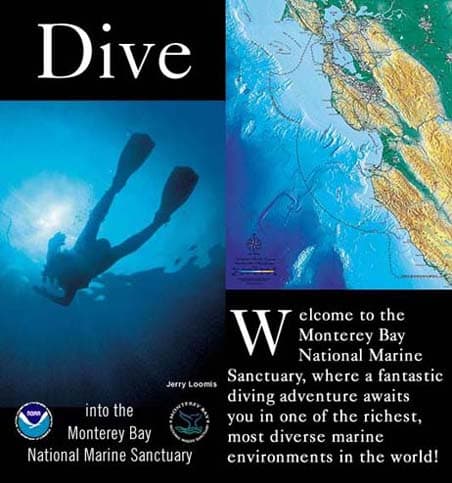
The Monterey Bay National Marine Sanctuary--A Special Place |
|
|
|
|||||
|
|
|||||
|
|
|||||
|
Help Protect the Sanctuary
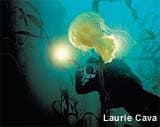
To make your dives more enjoyable and safe, and to help protect this national treasure, please: Sharpen your skills. Master the basic skills of diving (particularly buoyancy) well enough to be completely at ease. You'll be safer and enjoy more of what you're seeing.
Plan your dive well. Diving these waters is challenging. You may want to hire a local divemaster or instructor to accompany you on your first dives. Know the unique characteristics of a dive site in advance, so that you don't become disoriented or lost. Before you dive, designate entry and exit points as well as contingency exit points in case conditions change unexpectedly. For specific dive site information, consult dive stores, charts or local divers. Control your buoyancy. Mastering buoyancy control means your dives will be safer and less strenuous. Streamline your equipment. Keeping gear close to your body reduces drag and the chances of entanglement. It is also helpful to tape down your fin straps. Sea life is everywhere and can be harmed by the kick of a fin, bump of a tank, or knock of the hand.
|
|
Keep
a safe distance from marine mammals. To
prevent disturbing harbor seals, California sea lions, sea otters
or other marine mammals, stay 50 to 100 yards away from them. If they
look in your direction and fidget, it's time to back away.
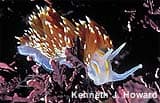
Avoid touching or taking anything. Your slightest touch can disturb marine life. Removing rock or shell for the sake of a souvenir can disrupt this fragile system.
Get Involved Divers are privileged to witness the diversity and abundance of marine life in the Monterey Bay National Marine Sanctuary. Share the wonder and promote responsible ocean stewardship by getting involved in some of these activities: • Join a dive club or conservation group that promotes education and conservation. • Try your hand at photography or videography, and use your undersea images to inspire others to learn more about the ocean. •Keep yourself informed about ocean issues. Be an advocate for responsible ocean management by making your voice known to management authorities or elected officials. • Take part in fish counts or underwater surveys that can help scientists and fisheries managers better understand changes in the marine ecosystem. • Participate in beach or underwater clean-ups.
|
|||
|
|
|||||
|
|
|||||
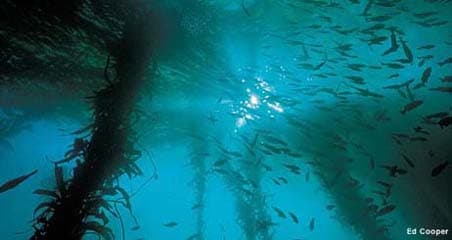
 Learn
the proper techniques for diving in kelp. Always
swim below the surface (kelp canopy) and navigate with your compass.
If you must swim over the canopy, carefully push the kelp down and
slowly dog paddle across. Don't panic or thrash around if entangled
in kelp. Slowly remove the kelp, or have your buddy gently untangle
it for you.
Learn
the proper techniques for diving in kelp. Always
swim below the surface (kelp canopy) and navigate with your compass.
If you must swim over the canopy, carefully push the kelp down and
slowly dog paddle across. Don't panic or thrash around if entangled
in kelp. Slowly remove the kelp, or have your buddy gently untangle
it for you.