

Resource Issues: Introduced Species
Overview of the issue
|
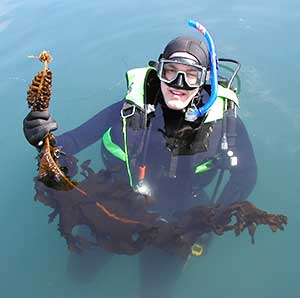 Diver with removed Undaria pinnatifida
Invasions by non-native aquatic species are increasingly common worldwide in coastal habitats. Estuaries, in particular, harbor large numbers of introduced species. For example, there are about 250 known invasive species in the San Francisco Bay and Delta. Within Sanctuary waters, there are approximately 40 invasive species in Elkhorn Slough, and another small handful of species recently reported in nearshore coastal waters. Known reports of invasive species have been summarized for the Sanctuary region. However, there has not been a systematic survey of nearshore coastal waters to evaluate the level of invasive species present.
Although the effects of introduced aquatic species on habitats they colonize is often unknown, some clearly have had serious negative influences. Impacts often include decreasing abundance and even local extinction of native species, alteration of habitat structure, and extensive economic costs due to biofouling. Probably the most important mechanism for the introduction of aquatic species is transport in ship ballast tanks, though other mechanisms such as introduction through improper disposal of aquarium materials, bait and seafood packing materials, aquaculture operations, and research activities can contribute to the issue.
How is the Sanctuary involved?
Regulations
As a result of discussions between the California State Resources Agency and the NOAA Office of National Marine Sanctuaries, NOAA is amending regulations of the marine sanctuaries at Monterey Bay, Gulf of the Farallones, Cordell Bank, and Channel Islands to reflect a single, consistent prohibition against introduction of non-indigenous species (plant and animal) into sanctuary waters. The federal prohibition will apply to both state and federal waters within the sanctuaries. Previous sanctuary regulations for introduced species were unique to each site, and their applicability to state waters varied from sanctuary to sanctuary. The proposed rule changes will produce more consistent and streamlined regulation of introduced species within all four national marine sanctuaries in California.
Eradication
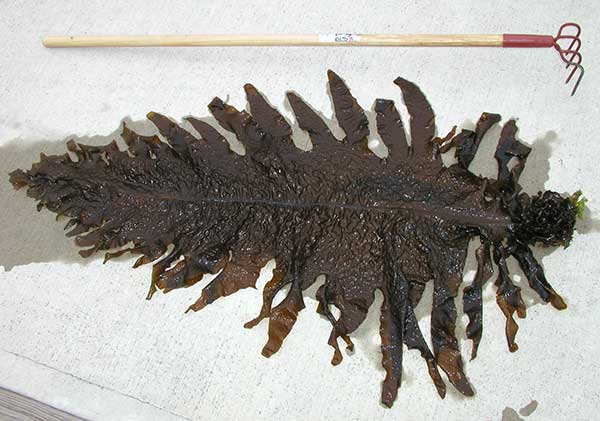
Eradication of introduced species is difficult and often impossible, and management practices focus largely on prevention of introductions. The Sanctuary has conducted some limited research and education on this issue and occasionally reviewed and provided comments to other agencies on ways to prevent introductions. MBNMS has also organized an attempt to eradicate the invasive alga Undaria pinnatifida from Monterey Harbor.
|