

Ecosystem-Based Management
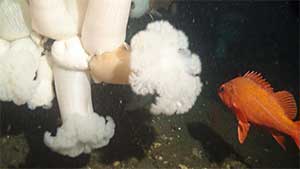 |
| A yelloweye rockfish seeks refuge in metridium anemones |
The ocean's health is critical to all life on the planet, as well as to our economic and physical well-being. Monterey Bay National Marine Sanctuary (MBNMS) is particularly important because it supports one of the world's most diverse and productive marine ecosystems. The sanctuary is affected by many human activities that are actively managed by local, state, and federal agencies to reduce risks posed by pollution, resource extraction and habitat degradation. While specific agencies often concentrate on single issues or resources, protecting the ecosystem as a whole requires an integrated approach.
MBNMS focuses ecosystem-based management efforts on the interconnections among all the physical and biological features of the marine environment, as well as on the interactions among the various resource users and managers.
How is the Sanctuary involved?
Current Projects:
- Collaborative Groundfish Essential Fish Habitat (EFH) Proposal (5.9M PDF)
- identify groundfish habitat in MBNMS not currently protected
- propose new EFH Habitat Areas of Particular Concern (HAPCs) and new Conservation Areas that minimize adverse fishing impacts
- propose reopening certain sections of existing EFH Conservation Areas for fishing
- Establishing Sanctuary Ecologically Significant Areas
- Coordinating on the California Current Integrated Ecosystem Assessments with NMFS and other agencies
In July of 2013, MBNMS and key stakeholders submitted this collaborative proposal to the Pacific Fisheries Management Council to modify boundaries for Groundfish Essential Fish Habitat coastwide. The overall goal of the MBNMS proposal was to protect more total area and more sensitive habitats in MBNMS while improving fishing opportunities for the trawl fleet. The adopted regulations would be implemented by National Marine Fisheries Service (NMFS). The proposal development process was led by MBNMS staff, and stakeholders included the Alliance of Communities for Sustainable Fisheries, Monterey Bay trawl fishermen, the City of Monterey, Oceana, Natural Resources Defense Council, Ocean Conservancy, The Nature Conservancy, the California Risk Pool and Environmental Defense Fund. The primary goals were:
In January of 2020, NMFS implements Amendment 28 to the Pacific Coast Groundfish Fishery Management Plan, in Washington, Oregon, and California under the Pacific Coast Groundfish Fishery Management Plan. MBNMS’s collaborative proposal was accepted and integrated into the west coast EFH modifications, and also served as a model for a collaborative process that was implemented along the entire west coast. More information on the NMFS federal register notice can be found here.
Past Projects:
- Ecosystem Based Management Initiative
- Research Workshop (1.1M PDF file)
- Unique and Rare Workshop (787K PDF file)