


What Is A Motorized Personal Watercraft?
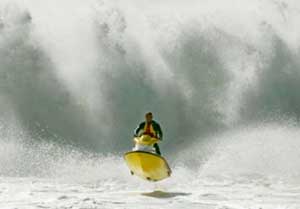 The sanctuary defines a "motorized personal watercraft" as any vessel, propelled by machinery, that is designed to be operated by standing, sitting, or kneeling on, astride, or behind the vessel, in contrast to the conventional manner, where the operator stands or sits inside the vessel; any vessel less than 20 feet in length overall as manufactured and propelled by machinery and that has been exempted from compliance with the U.S. Coast Guard's Maximum Capacities Marking for Load Capacity regulation (i.e. any vessel waived from Coast Guard capacity plate requirements) found at 33 CFR Parts 181 and 183, except submarines; or any other vessel that is less than 20 feet in length overall as manufactured, and is propelled by a water jet pump or drive. The term includes, but is not limited to, Jet Skis®, wet bikes, surf jets, miniature speedboats, air boats, and hovercraft. A personal watercraft rider is also considered a boater. Personal watercrafts are defined as Class A inboard boats by the U.S. Coast Guard and are required to follow most boating regulations. For more information, contact the U.S. Coast Guard or the California Department of Boating and Waterways.
Operating Zones Within the Sanctuary
To help protect Sanctuary habitats and sensitive marine life, it is unlawful for any person to operate motorized personal watercraft except within five designated zones and access routes (map) established by federal regulation (15 CFR, 922.132(a)(7)). Motorized personal watercraft may launch only within the identified harbors and must proceed directly to the operating zone outside each harbor through the specified access route. Zone boundaries are marked by buoys and navigation aids. Zone 5 at the Mavericks surf break in Half Moon Bay is only open when official High Surf Advisories are in effect for San Mateo County during the months of December, January, and February. More information about the Mavericks zone.
Frequently Asked Questions about Motorized Personal Watercraft
Tips For Responsible Watercraft Use:
 Protect Sensitive Shorelines
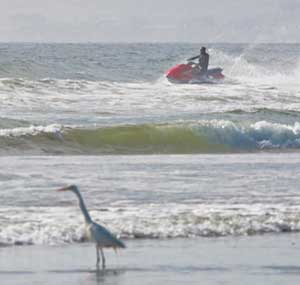
From wave-swept beaches and lush kelp forests to tranquil estuaries, the Sanctuary's near-shore habitats are fragile and full of life. The watercraft operating zones are designed to provide special protection for these areas. Stay within the zones and access routes at all times, and launch and return to shore only within the designated harbors.
Watch Out For Wildlife
You may encounter sea birds, sea turtles or marine mammals such as sea otters, seals, sea lions, whales or dolphins while riding in the Sanctuary. Although it may be tempting to approach them for a closer look, these are protected animals. It is against federal law to disturb them or cause them to change their behavior. Please observe from a distance! You are too close if an animal starts to stare, fidget or flee. Slowly and quietly back away. Stay at least 150 feet or 46 meters away. If you want to observe wildlife while riding, idle your speed to reduce wake and noise, and watch quietly from a non-threatening distance. Disturbing animals deprives them of needed rest, may interrupt or stop feeding, or force them to burn precious energy by fleeing.
Slow Your Speed
Speeding can be dangerous to marine life. Avoid areas concentrated with wildlife, such as large gatherings of resting sea birds, or groups of marine mammals. Minimize disturbance by riding slowly near sensitive habitats such as kelp forests. Check with authorities for state and local speed restrictions.
Reduce Noise
Noise may disturb resting birds or marine mammals. If you encounter wildlife, slow or idle your speed to reduce noise and the chance of disturbing animals.
Prevent Pollution
Help keep the Sanctuary a beautiful place by stowing your trash for disposal in port and picking up any plastic you see floating in the water. Marine life can get entangled in plastic or mistake it for food.
Spills Aren't Slick
It is illegal to discharge or dump materials into the Sanctuary. Even small amounts of oil or gas can be deadly to wildlife. Prevent fuel spills by filling your tank slowly, not overfilling, and wiping up any accidental spills quickly with an absorbent pad. Report spills you see to 1-800 OILS-911 or the U.S. Coast Guard at 1-800-424-8802.