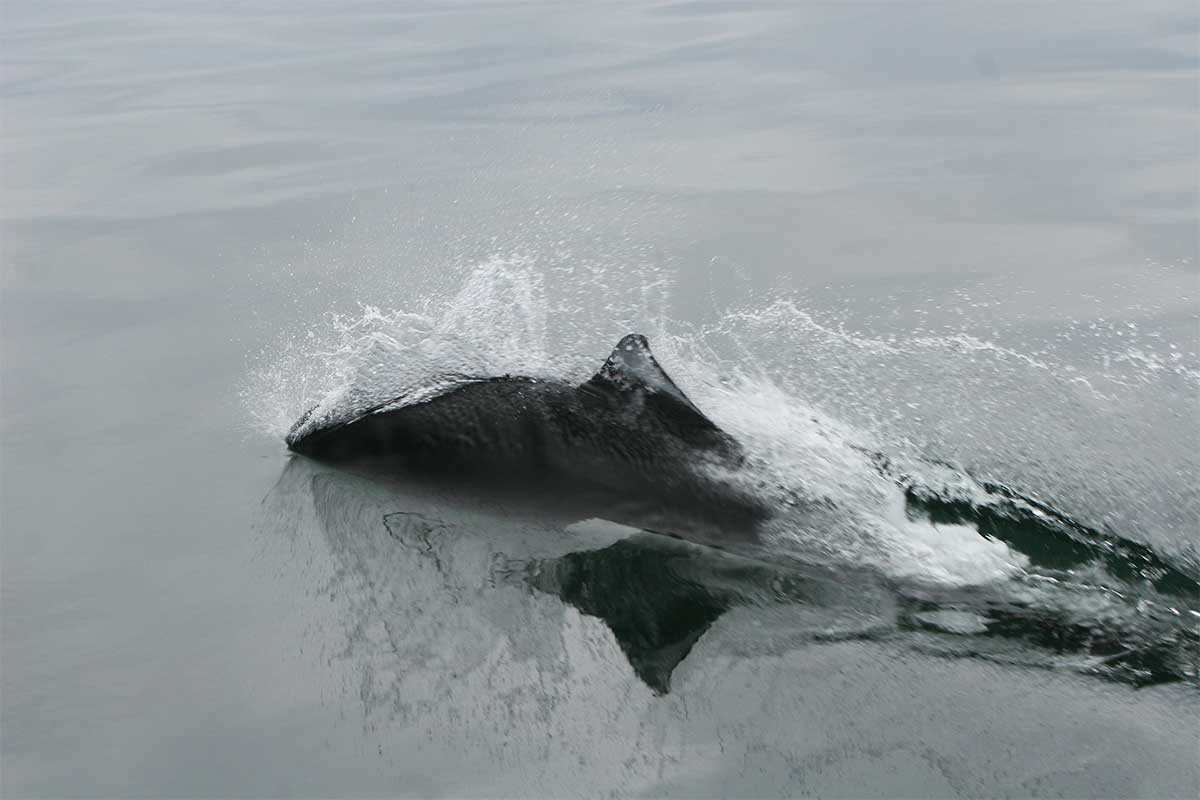
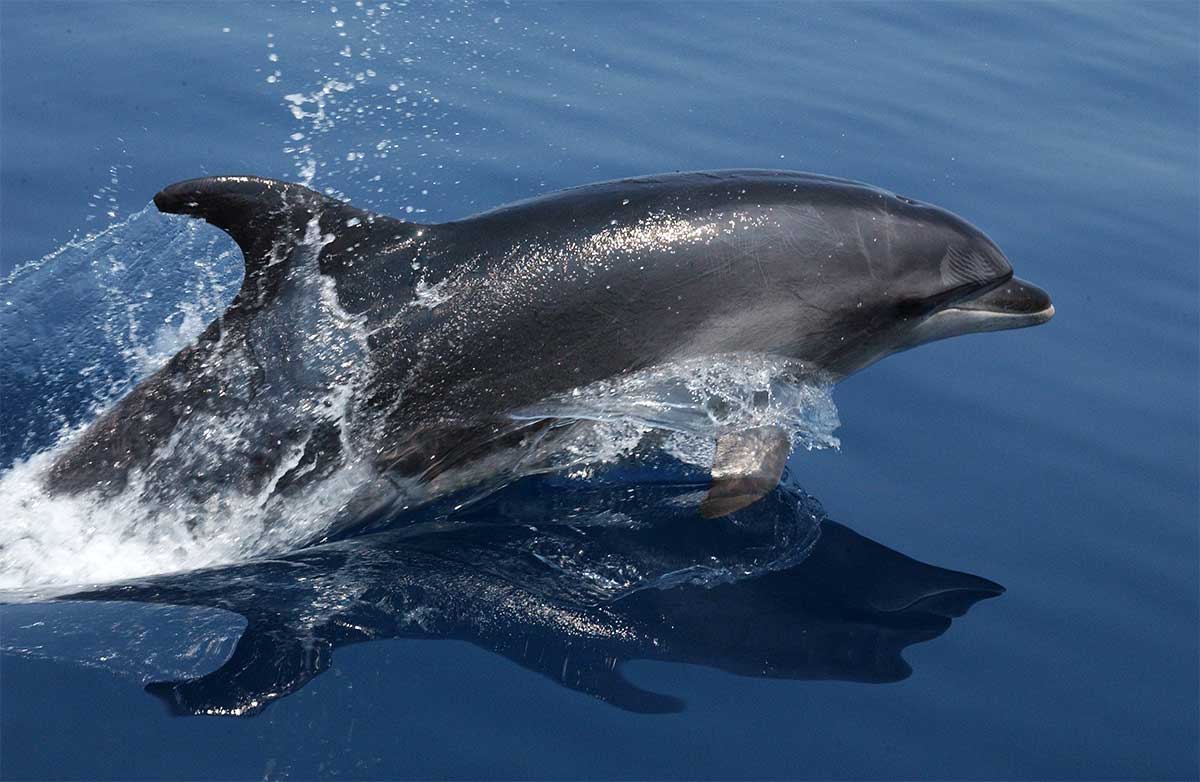
Whales, dolphins and porpoises are divided into two groups: toothed and baleen. Baleen whales, such as gray and humpback whales, have hundreds of comb-like plates with stiff bristles growing from the upper jaw to strain small food from huge mouthfuls of water. Toothed whales, including dolphins, porpoises, sperm whales and orcas, use sharp, pointed teeth to catch fish and other large prey. Depending on what time of the year you visit the sanctuary, the most likely species you might see include:
Baleen Whales
Gray Whale
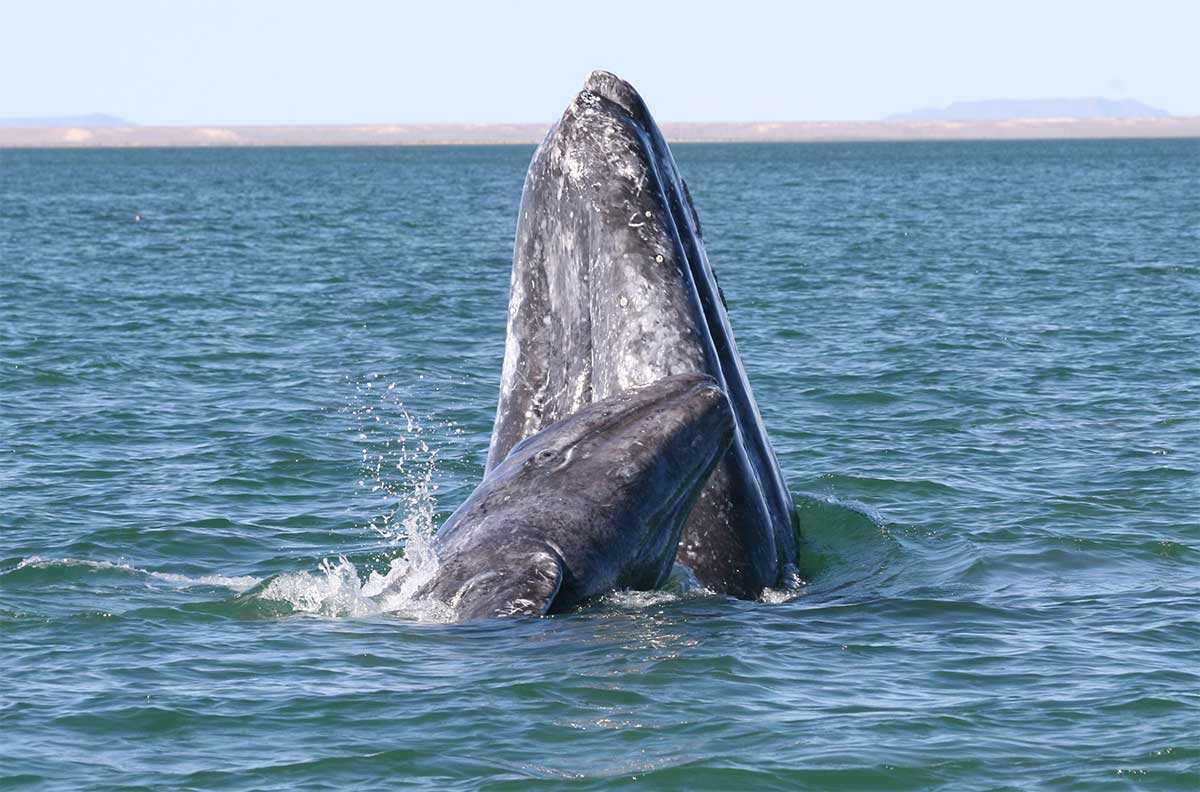
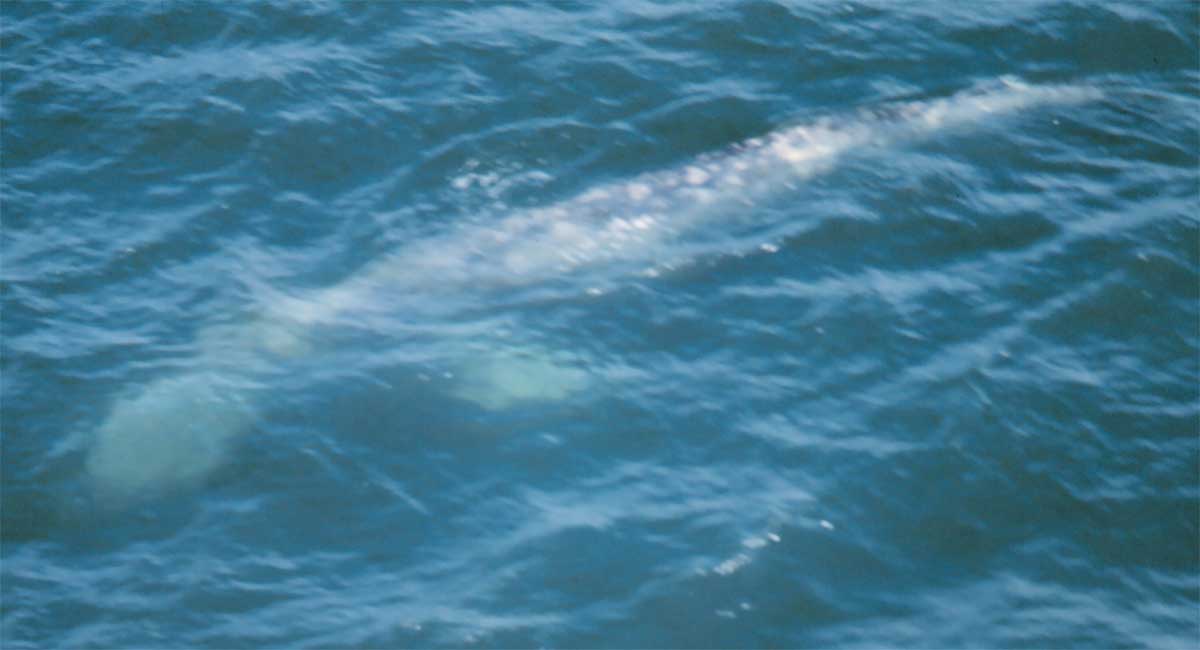
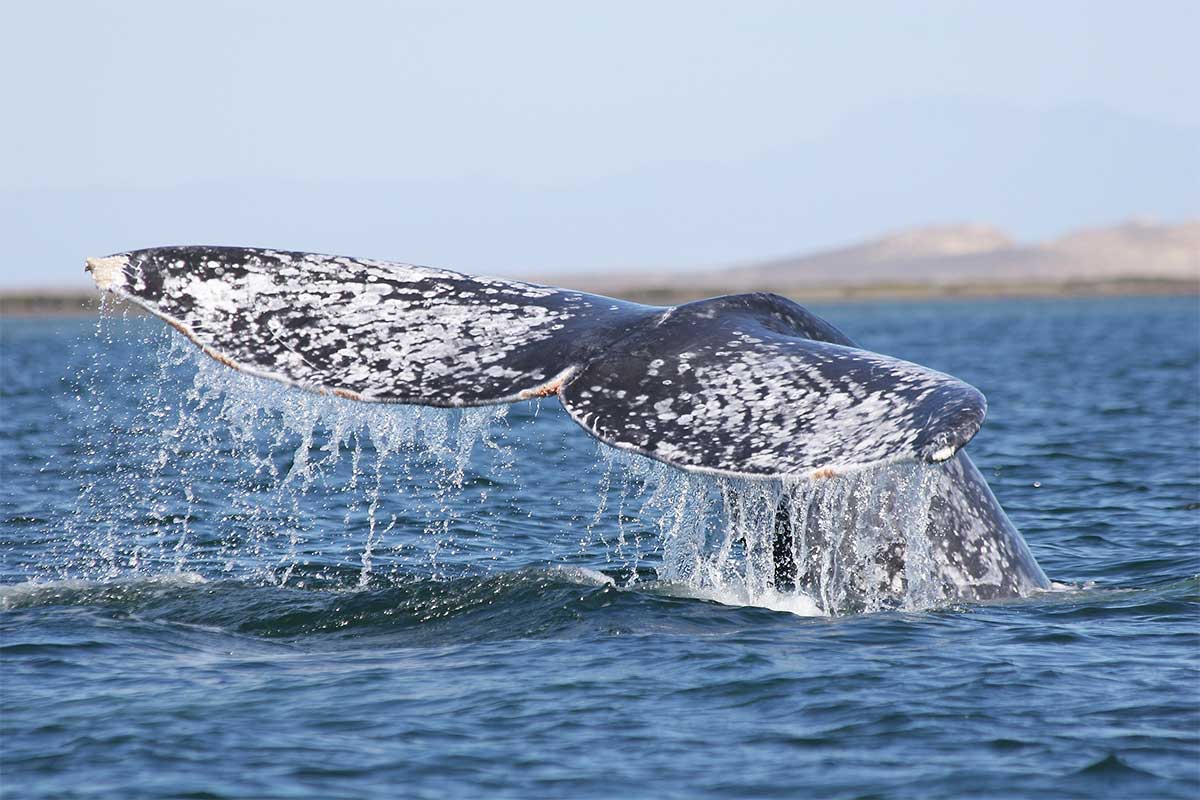
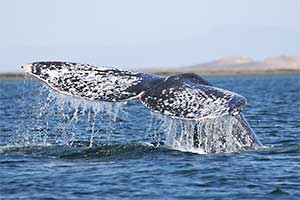
During the winter and spring, almost the entire gray whale population migrates through the sanctuary, usually within three kilometers of shore, traveling between their summer feeding grounds in the Bering Sea and to their winter breeding grounds in Baja. Though most populations of large whales are greatly reduced, the gray whale population is an exception: In 1994 the population, estimated to be similar to historical levels (21,100-23,000 individuals), was removed from the endangered species list. Gray whales are rarely seen feeding in central California, however they are prey for killer whales, as sometimes witnessed by those on whale watching boats. |
 |
 |
 |
|
Blue Whale
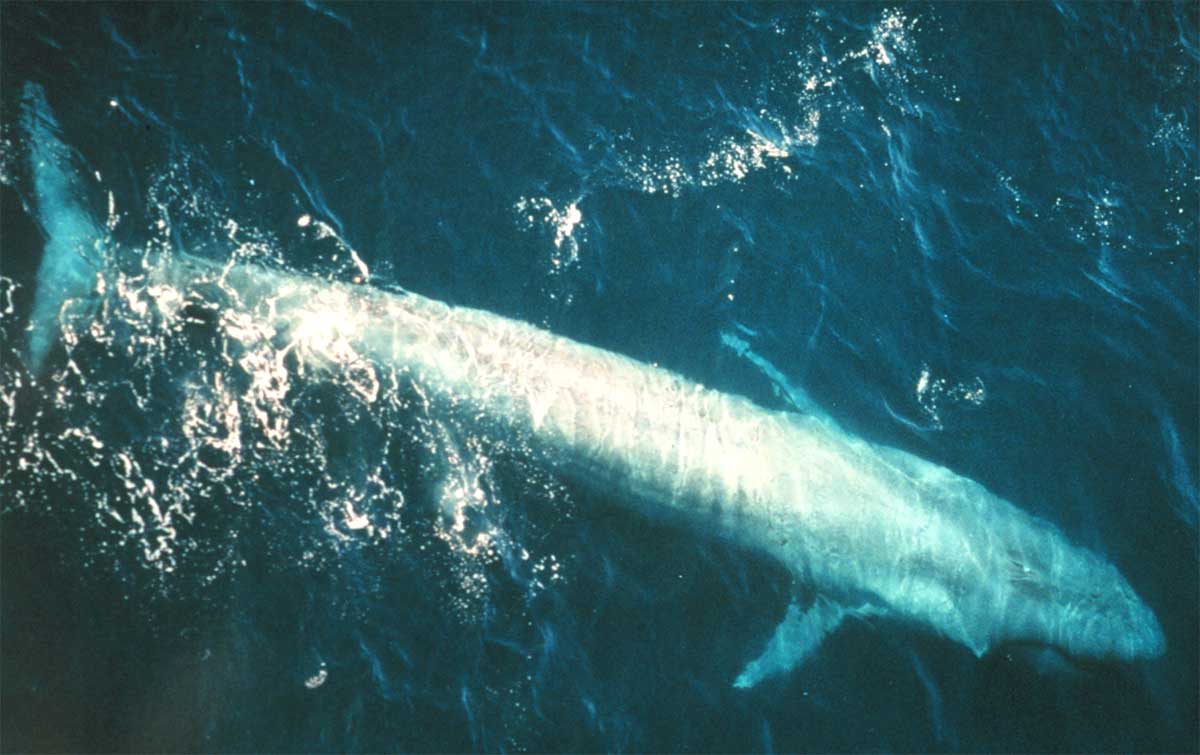
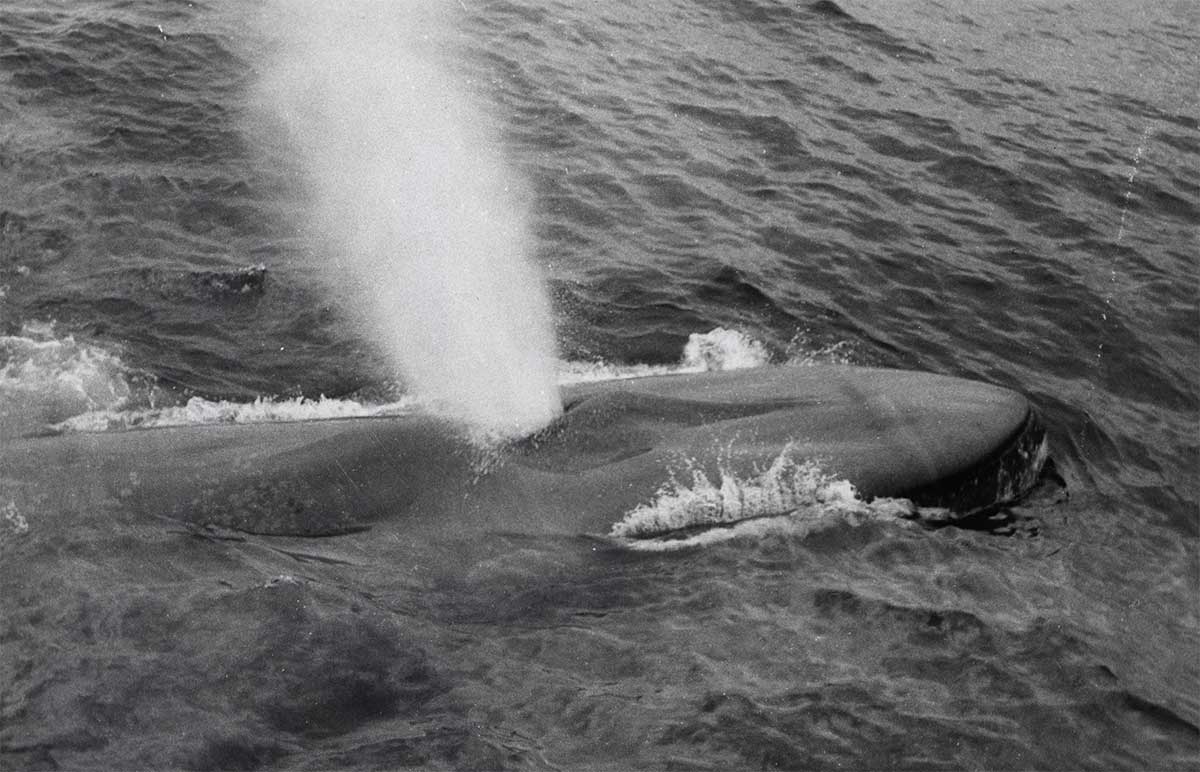
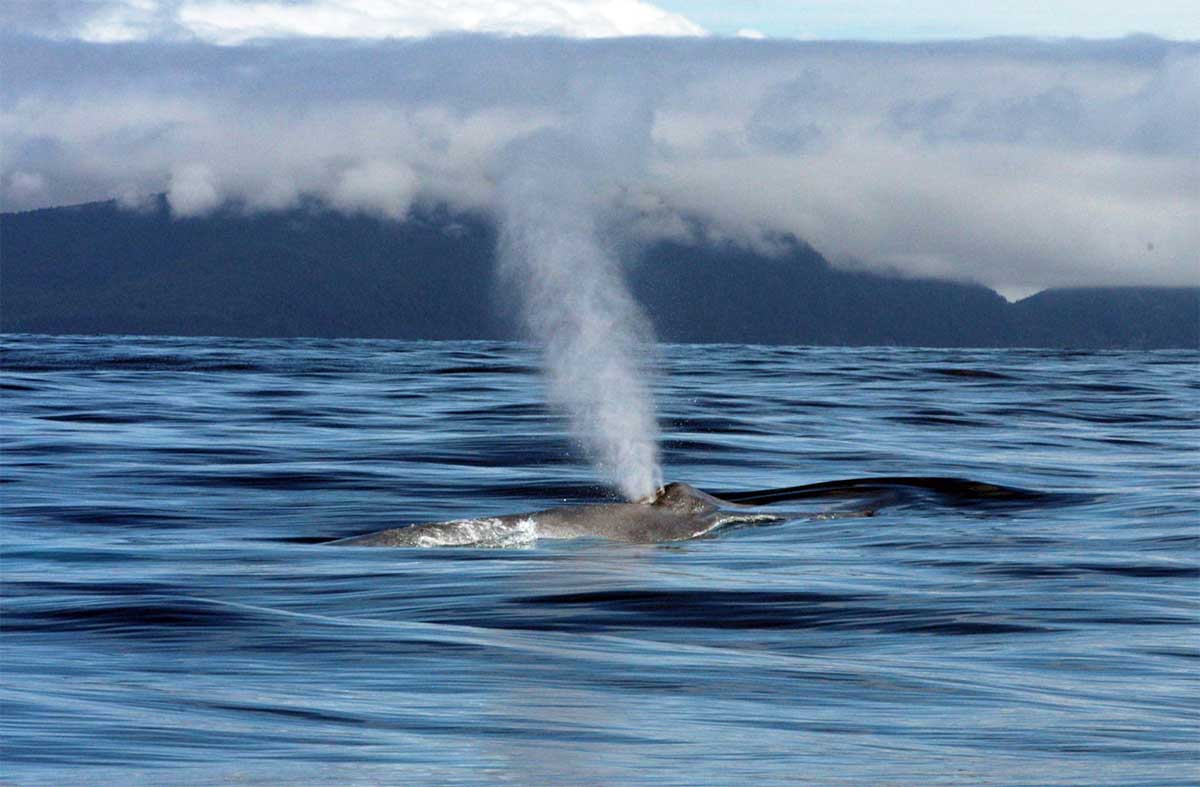
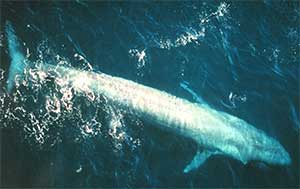
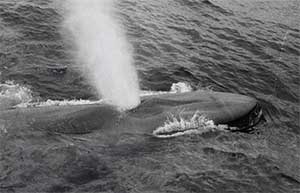
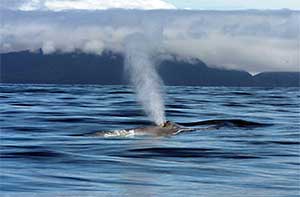
Blue whales can move along the entire California coastline during summer and fall searching for their prey —great swarms of krill. Blue whales are attracted to sanctuary waters during this time, when krill swarms are often seen in great concentrations in Monterey Bay. Blue whales were significantly depleted by commercial whaling and are still considered an endangered species. |
 |
 |
 |
|
Humpback Whale
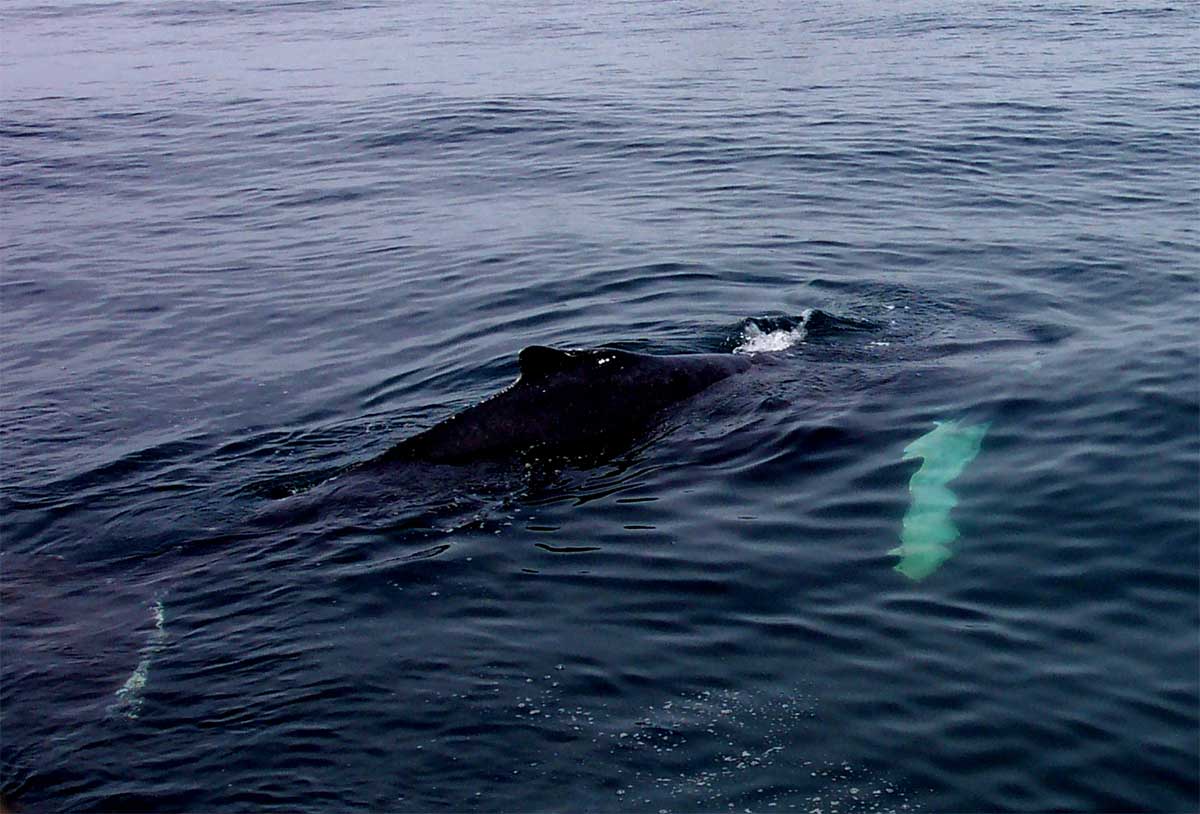
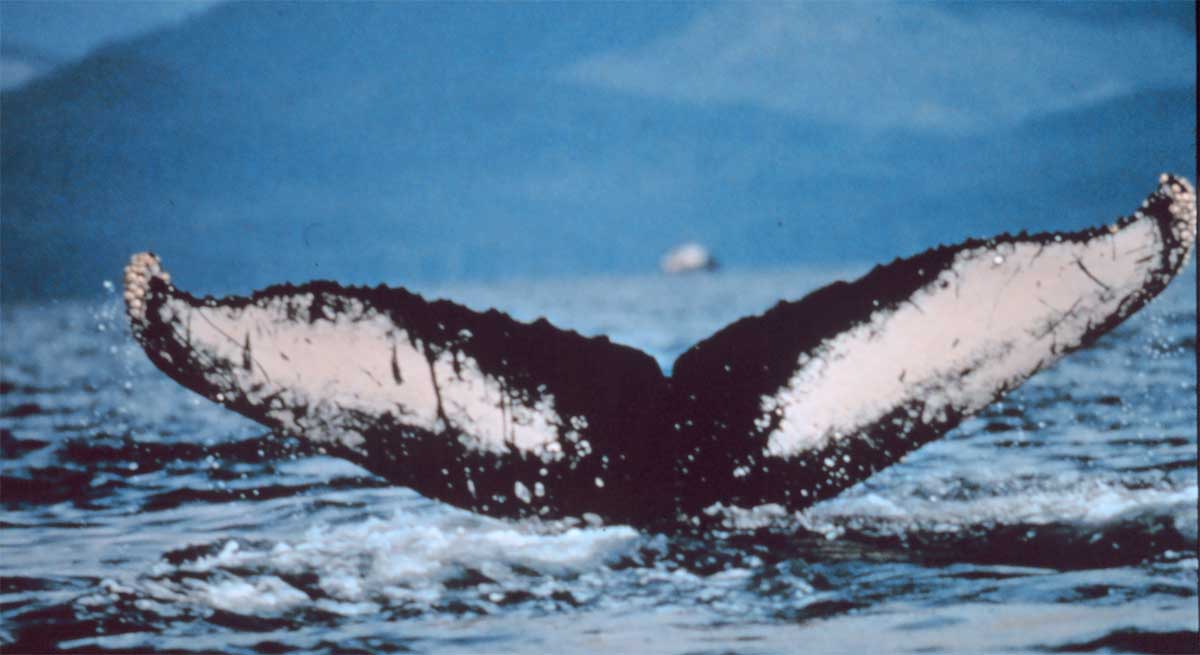
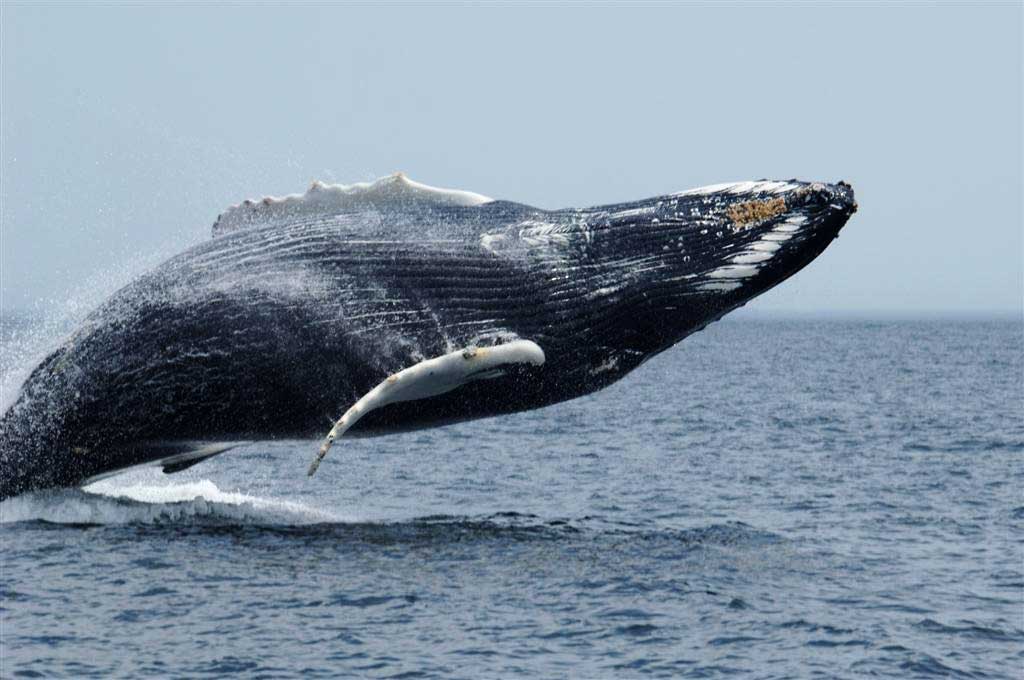
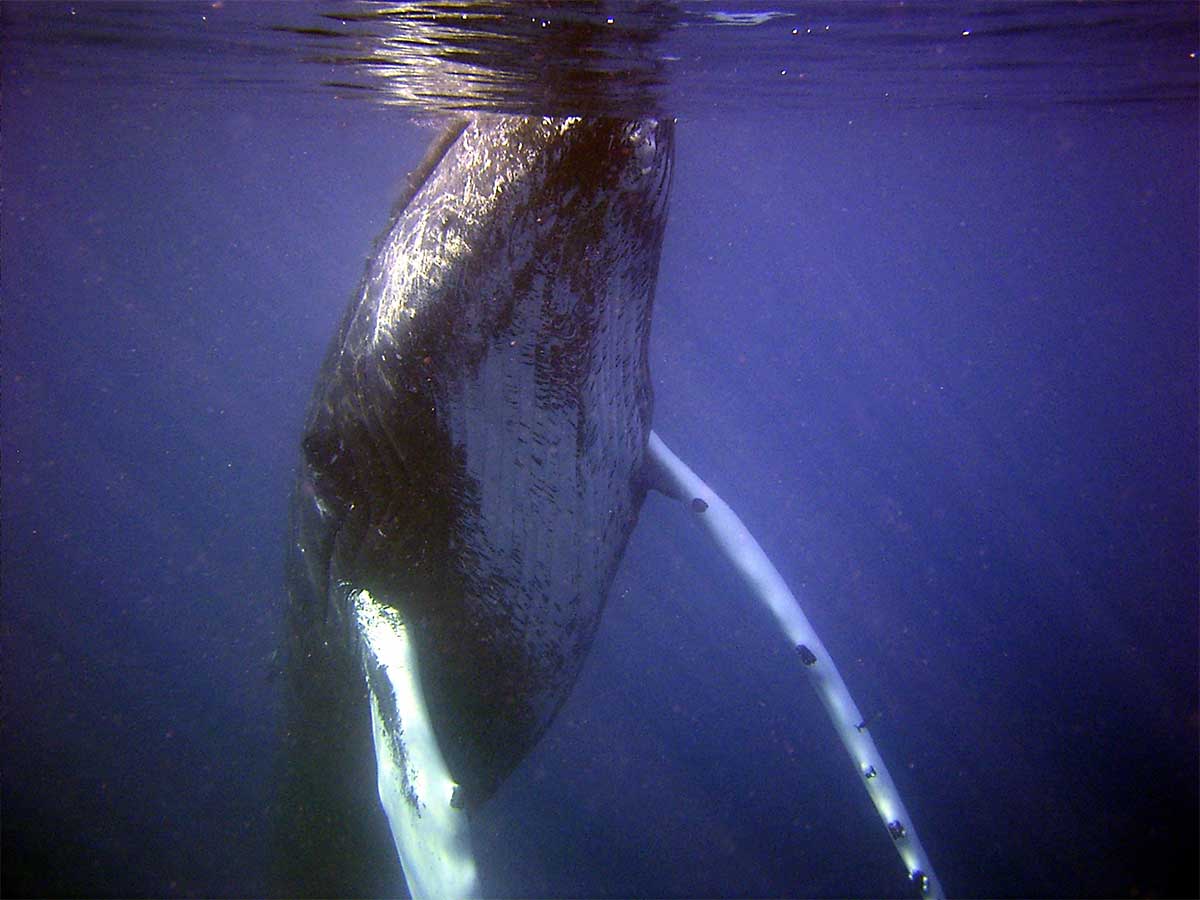
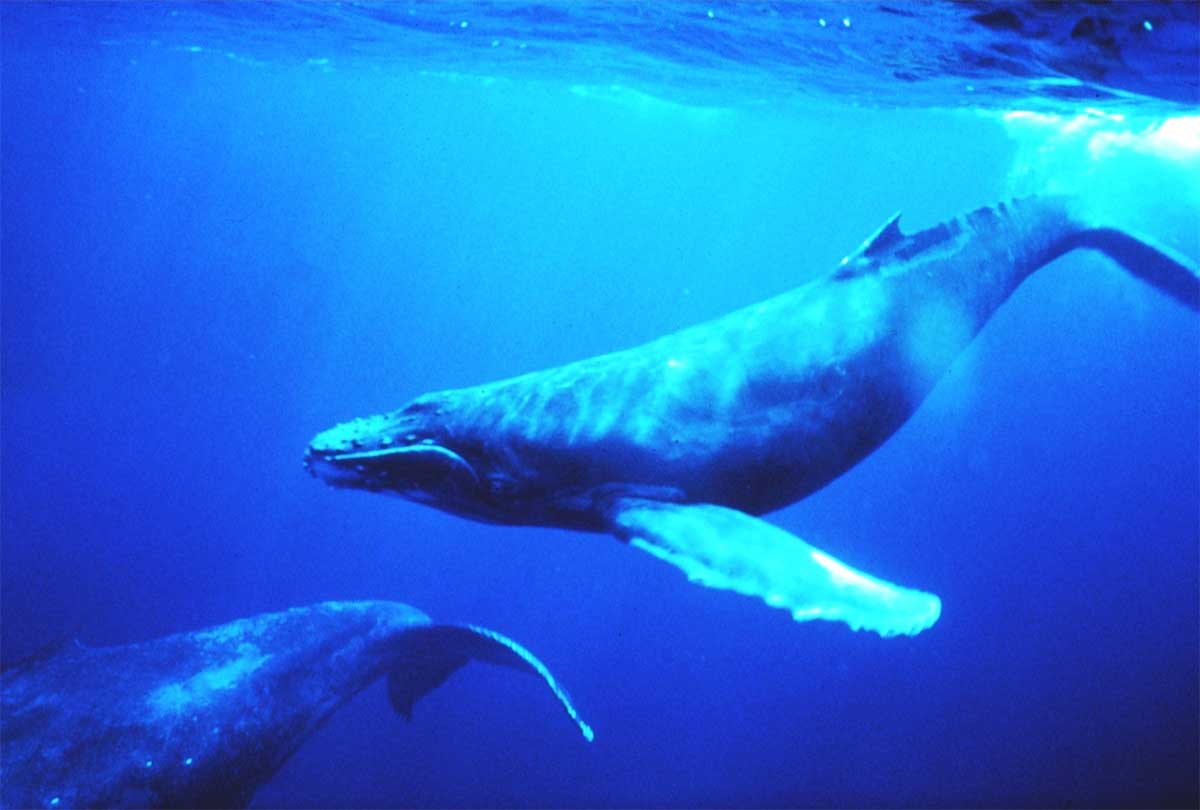
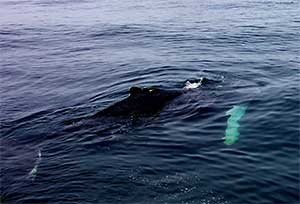
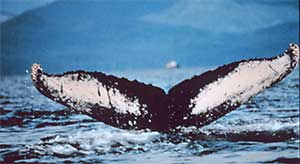
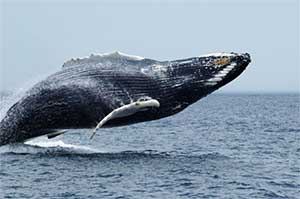
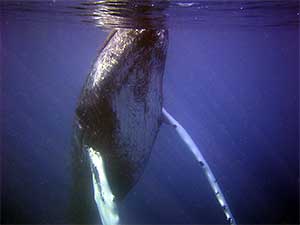
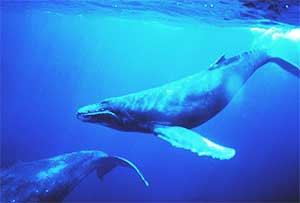
Humpback whales are one of the more commonly seen large baleen whales in the sanctuary, mostly sighted during summer and fall as they feast on krill. Humpbacks also dive in the sanctuary for schools of small fish such as anchovies and sardines. They can consume up to 3,000 pounds (1360 kg) of food per day! They use several kinds of hunting methods involving air bubbles to herd, corral, or disorient fish. They often feed in the same spot for several days, making them easy to find. Humpback whales are the favorite of whale watchers, as they frequently perform aerial displays, such as breaching (jumping out of the water), or slapping the surface with their pectoral fins, tails, or heads. These whales are believed to winter in the coastal waters of Mexico and Central America and like blue whales, are still considered an endangered species. |
 |
 |
 |
 |
 |
|
Minke Whale
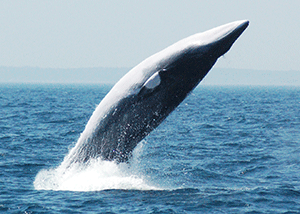
Sightings of minke whales are common in the nearshore waters of the sanctuary, but since sightings are usually of a single individual, these whales may easily be overlooked. They can be seen year-round, though are less common during winter. |
 |
|
Toothed Whales
Killer Whale
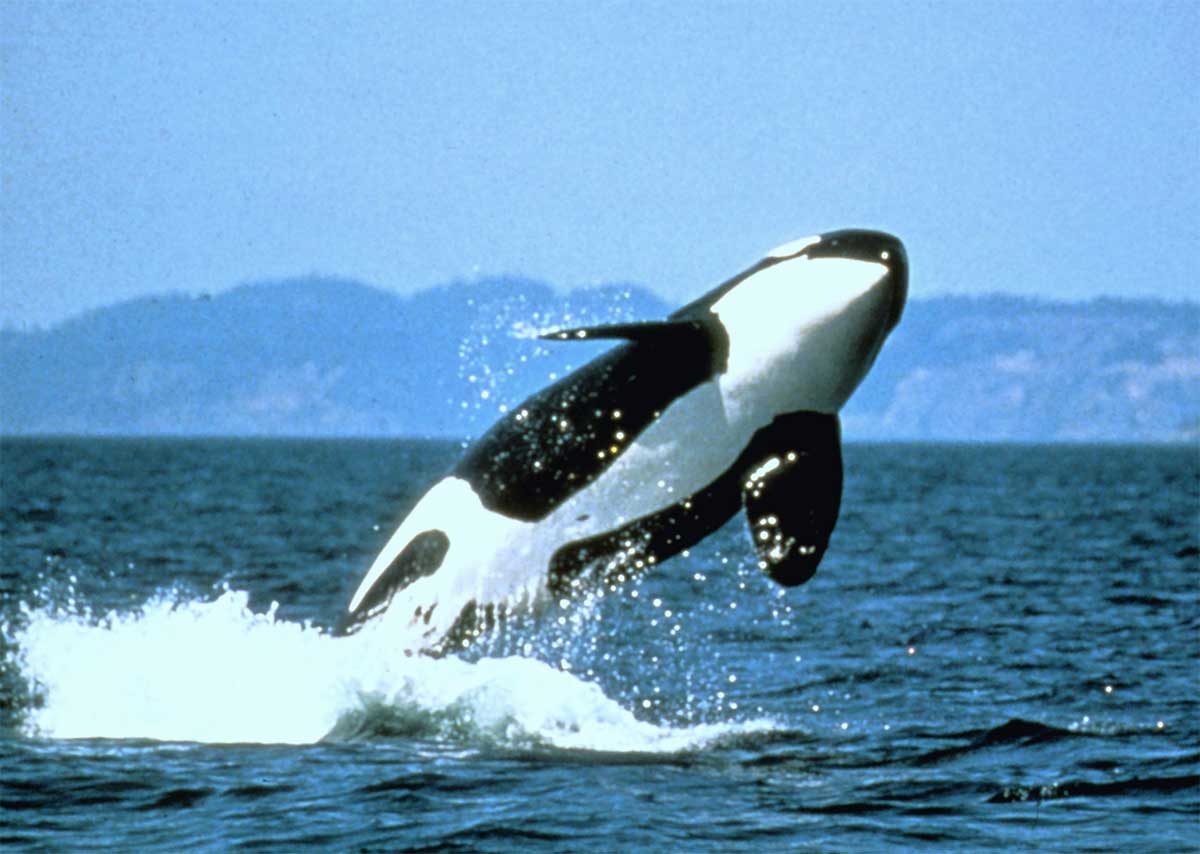
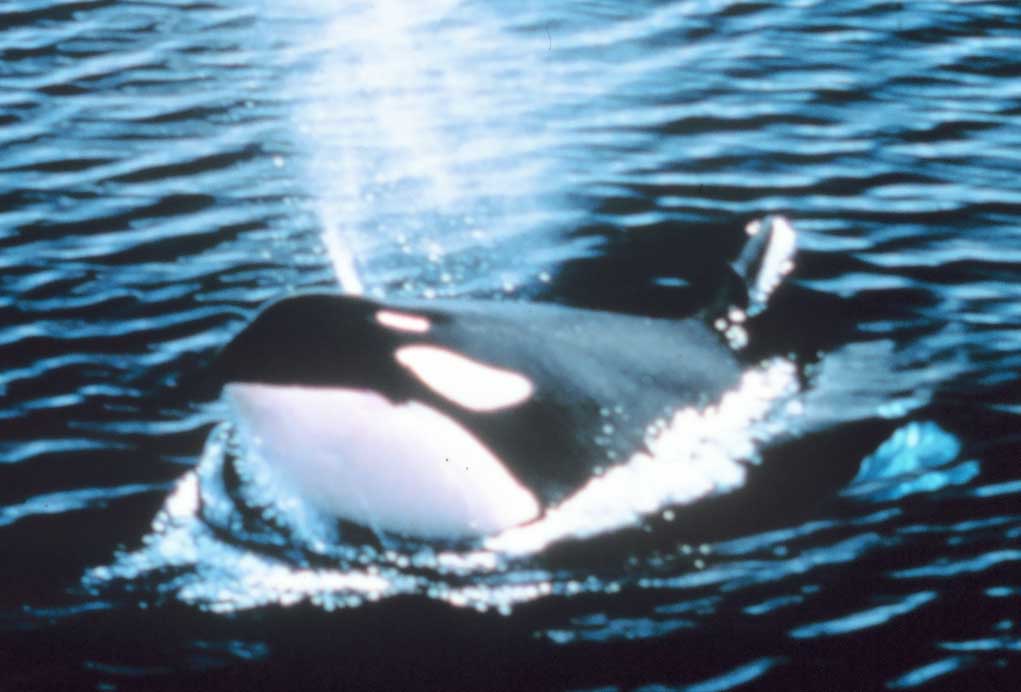
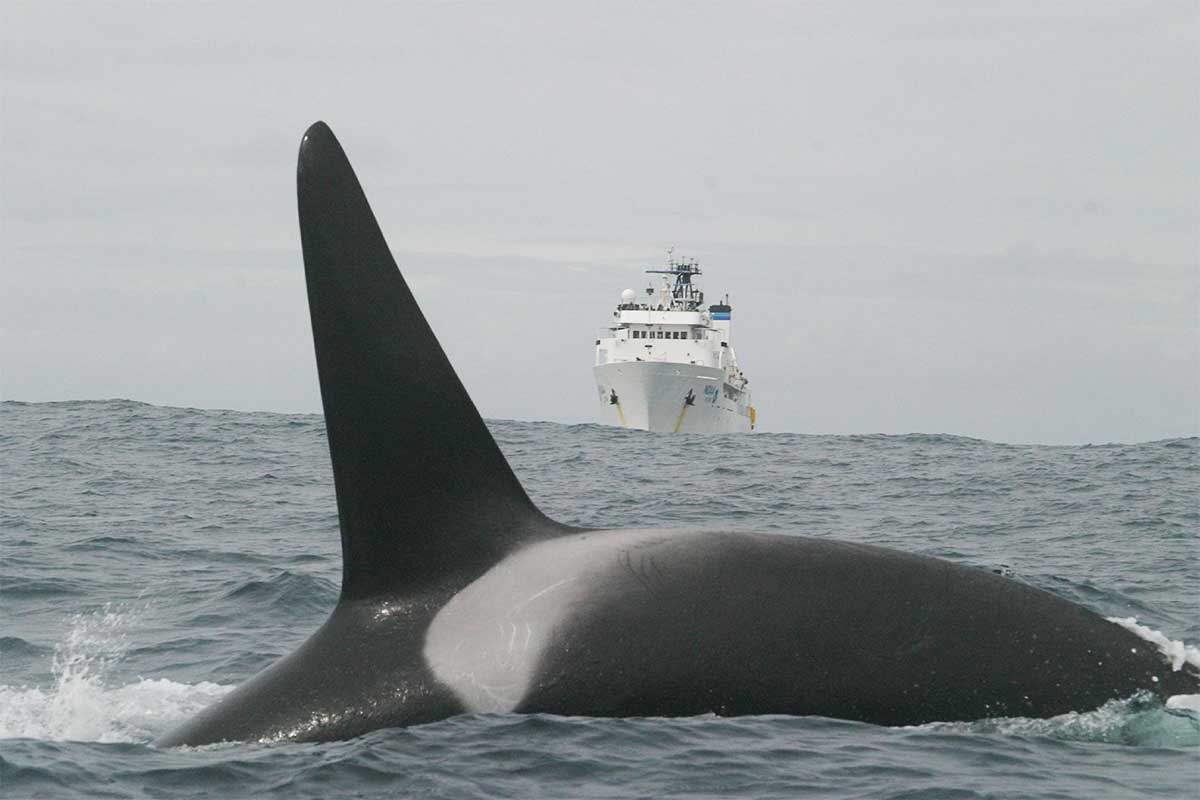
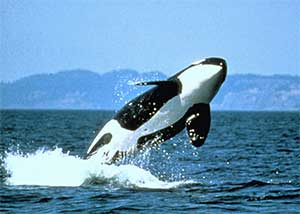
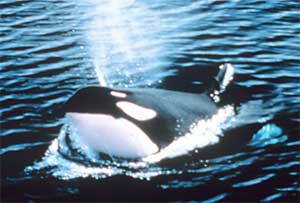
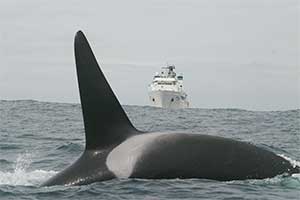
Killer whales are transient inhabitants of the sanctuary and likely move continuously along the coastline of western North America. Some killer whales seen attacking gray whales in Monterey Bay were identified as individuals sighted in Glacier Bay, Alaska. Transient killer whales often prey upon marine mammals, such as gray whales and California sea lions, which are their primary prey in the sanctuary. |
 |
 |
 |
|
Pacific White-sided Dolphin
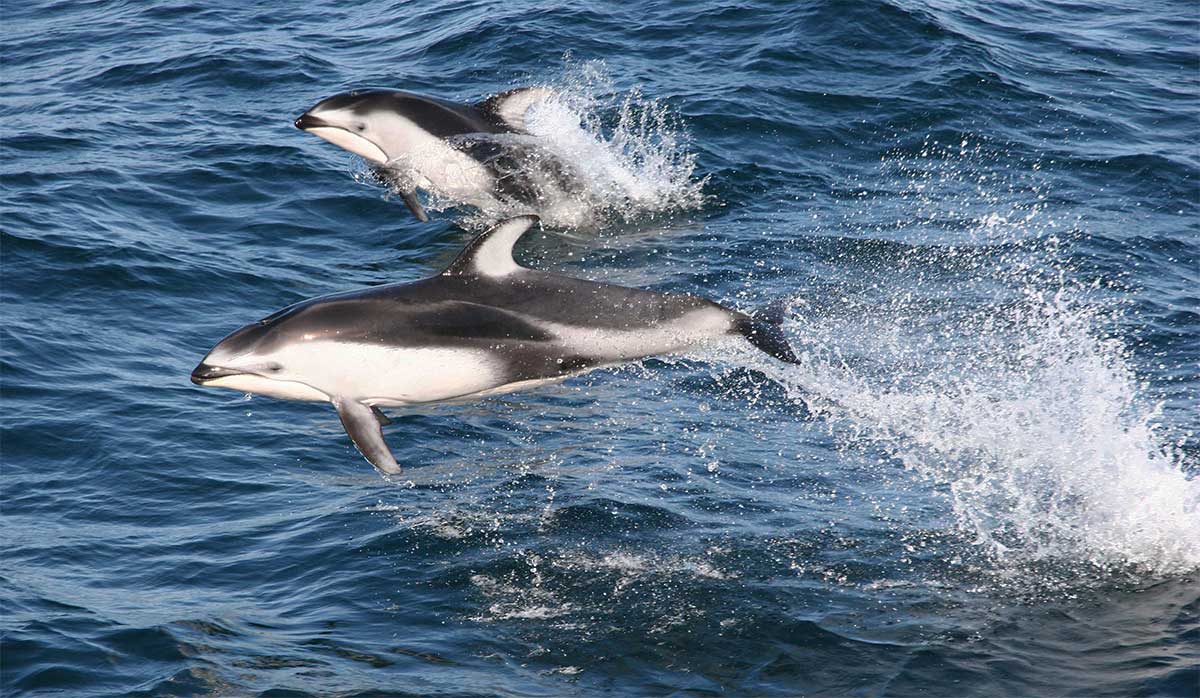
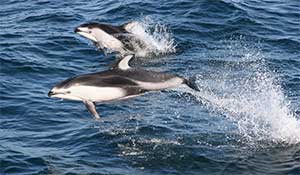
Pacific white-sided dolphins are one of the most commonly sighted dolphins. They can be seen year-round, especially during the fall. Extremely playful and highly social, schools of thousands are occasionally observed, but group size generally ranges from 10-100 animals. They are often observed "bow riding" and doing acrobatic somersaults. This species commonly associates with other cetaceans, such as Northern right whale dolphins and Risso's dolphins. They prey on squid and small schooling fish such as sardines and herring and are capable of diving more than 6 minutes to feed. When feeding during the day, they can be seen working together as a group to herd schools of fish. |
 |
|
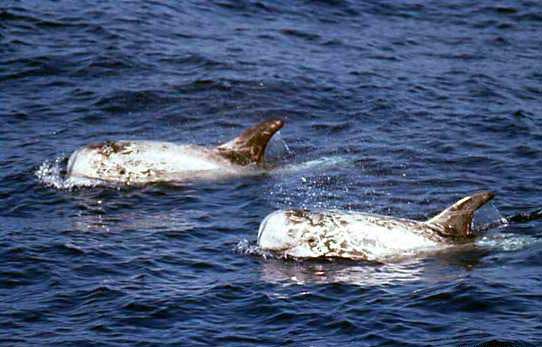
Risso's Dolphin
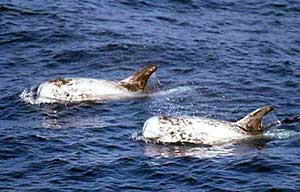
Risso's dolphins are relatively common off California, usually seen in small group of 10-30 animals. This species is often very active on the surface, engaging in behavior such as breaching, flipper-slapping, lobtailing and spyhopping. They can dive to at least 1,000 feet (300 m) and hold their breath for 30 minutes, but usually make shorter dives of 1-2 minutes. They mostly eat squid and feed mainly at night when their prey is closer to the surface. They lack teeth in the upper jaw and have only 2-7 pairs of peg-like teeth in their lower jaw to capture prey. |
 |
|
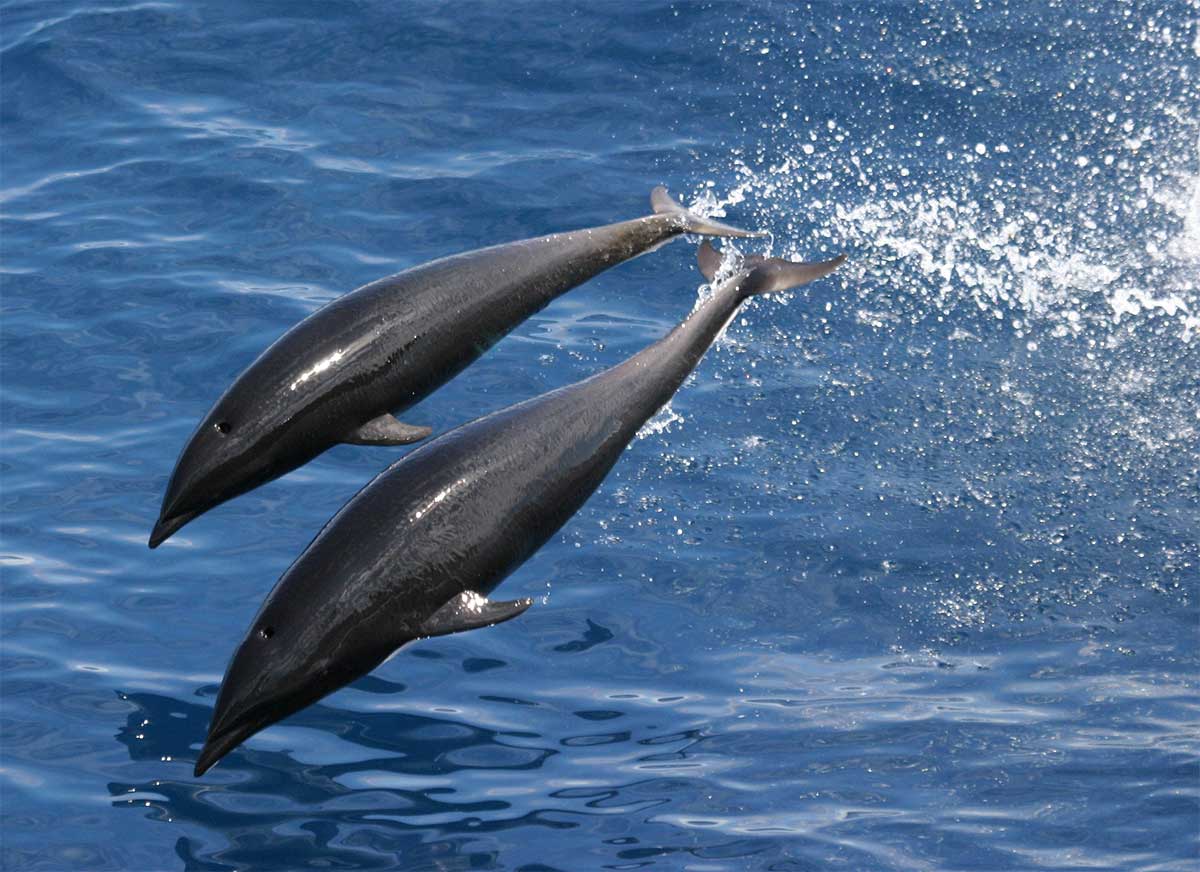
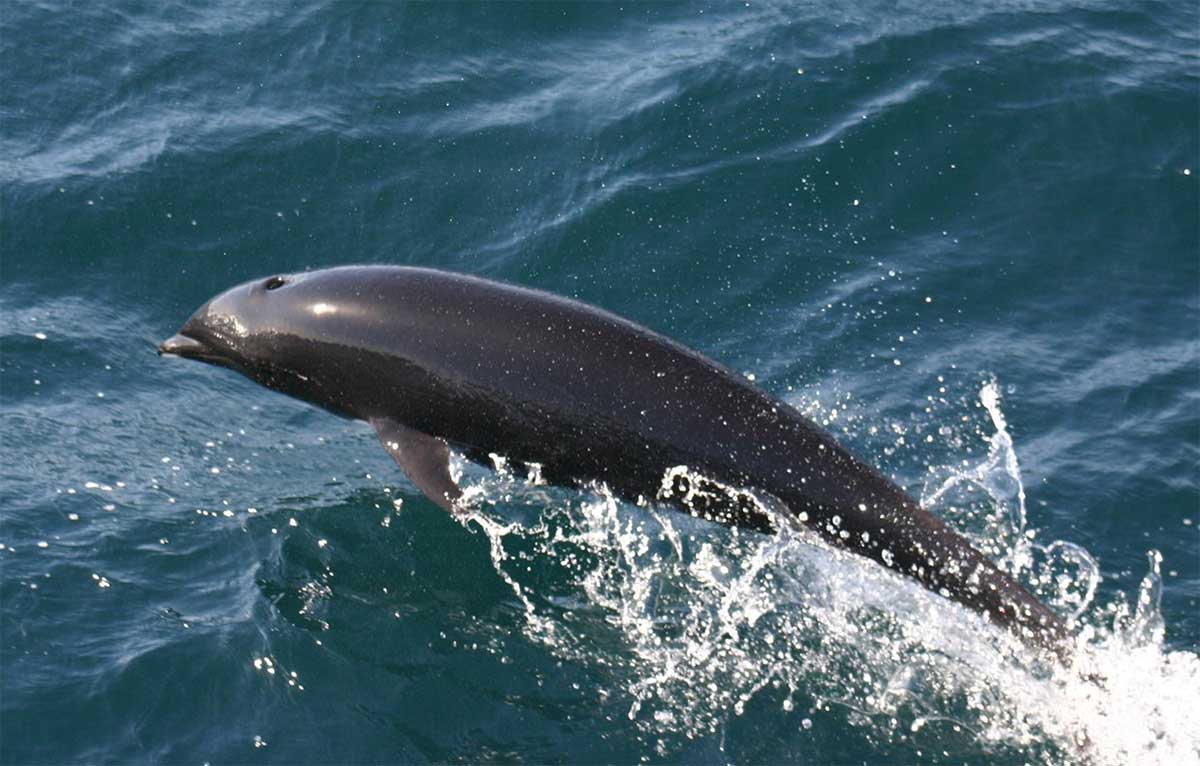
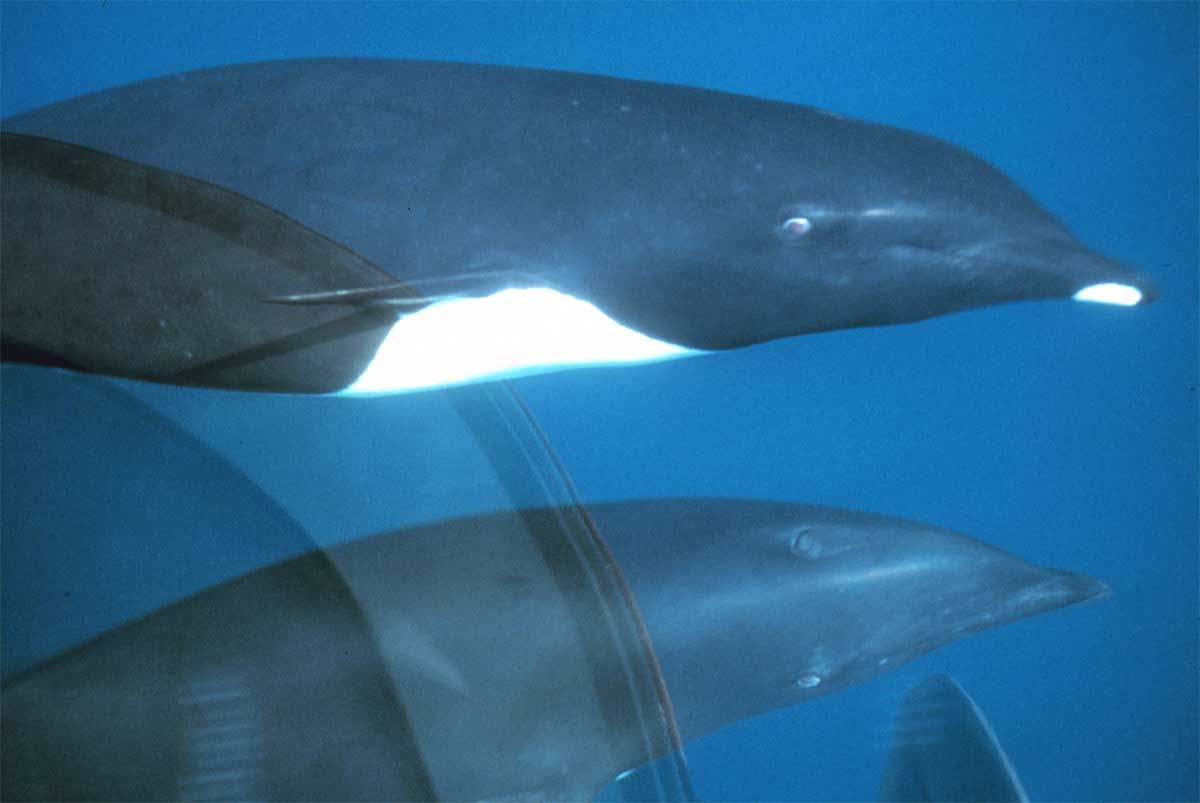
Northern Right Whale Dolphin
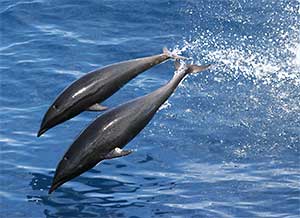
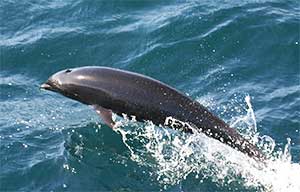
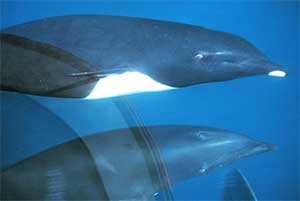
Northern right whale dolphins are usually found in tight social groups of about 100-200 individuals, but have been occasionally seen in larger groups of up to 2,000-3,000 animals. They are sometimes mixed with other cetacean species.
Northern right whale dolphins are fast swimmers and have been reported to reach sustained speeds of 16 miles per hour and bursts of 22 mph (26-35 km/hour)
They can dive and hold their breath for more than 6 minutes to feed on small deep-sea fish and squid. |
 |
 |
 |
|
Common Dolphin
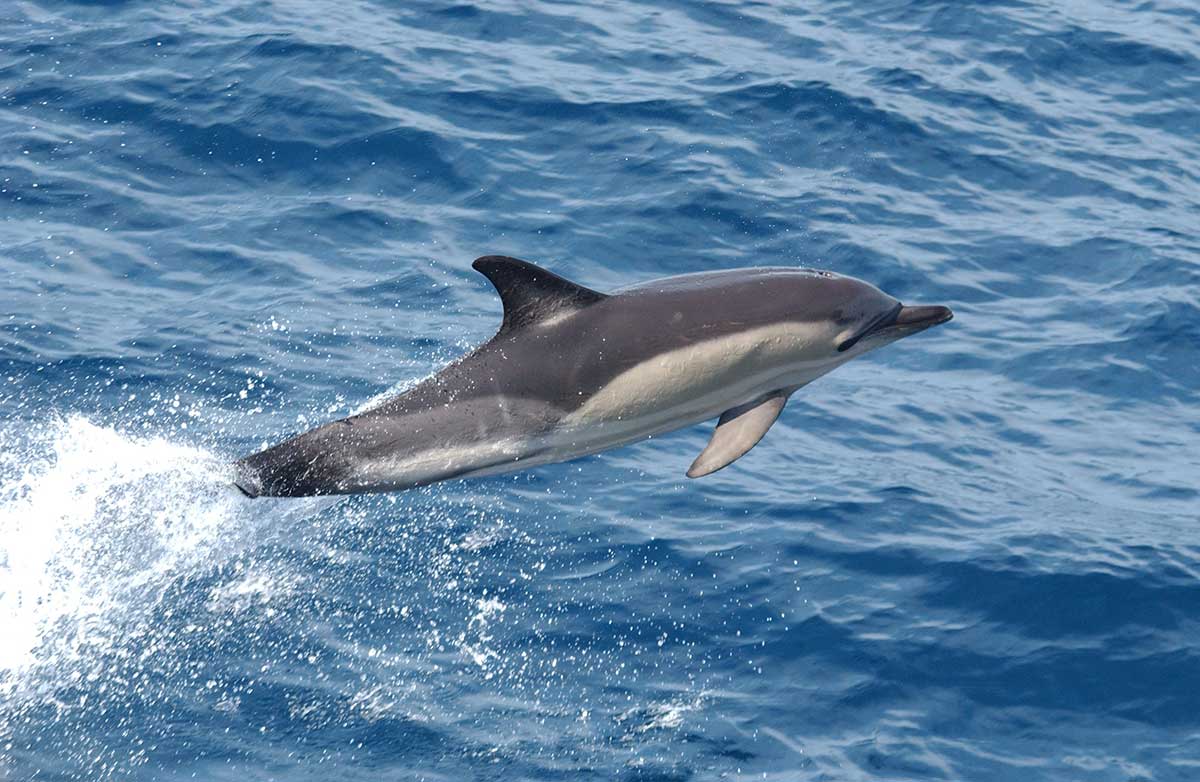
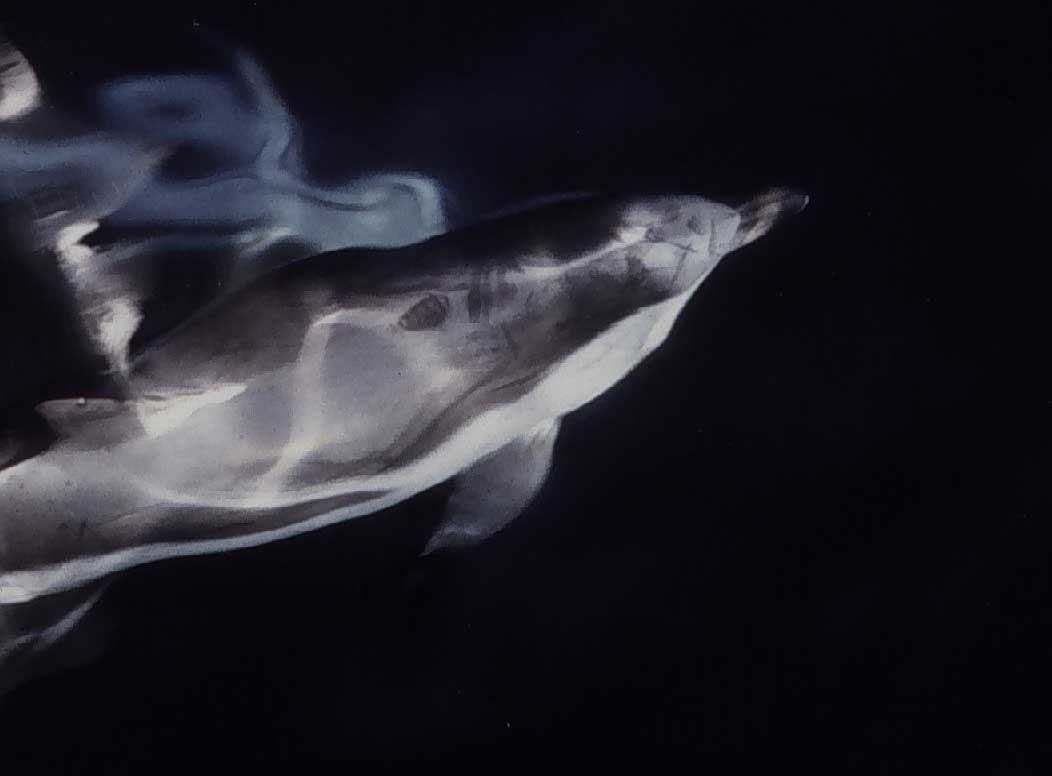
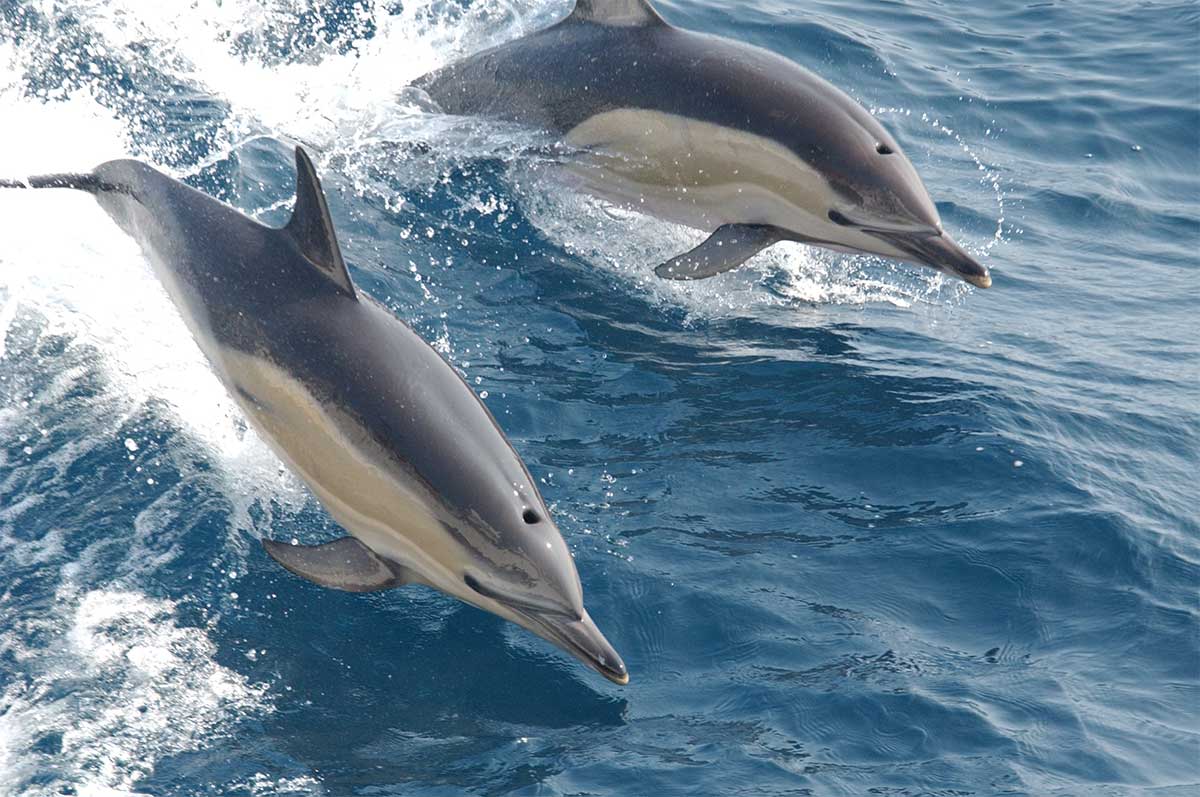
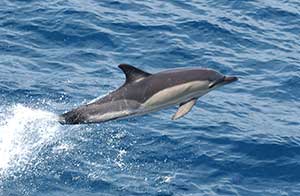
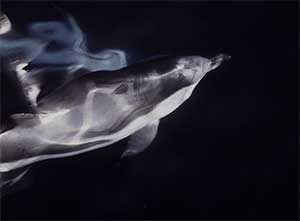
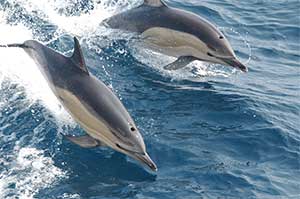
Two species of common dolphin have been described: long-beaked and short-beaked. Common dolphins are usually found in big social groups averaging hundreds of animals, but occasionally seen in larger pods of thousands. These fast and energetic dolphins are commonly seen breaching, porpoising and somersaulting. They will often approach ships to bowride for long periods of time. They mostly eat small schooling fish and squid. |
 |
 |
 |
|
Dall's Porpoise
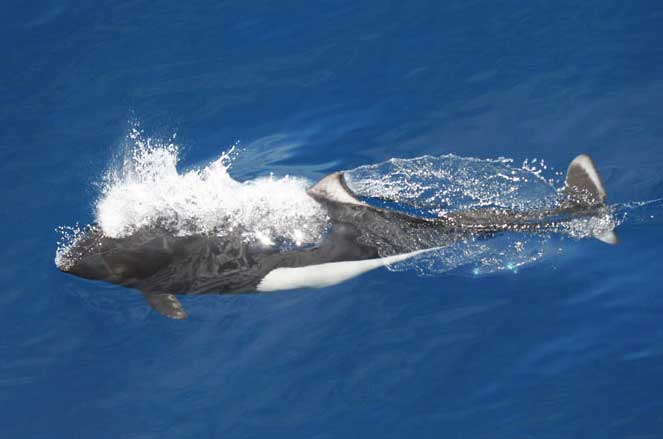
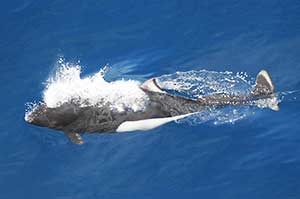
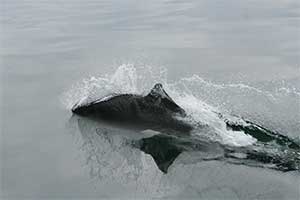
Dall's porpoise are an open ocean species, often seen over the Monterey Canyon. They feed on small schooling fish, squid, octopus and occasionally crabs and shrimp. Feeding usually occurs at night when their prey migrates vertically up toward the surface. Dall's porpoises are capable of diving up to 1640 feet (500 m) in order to reach their prey. Their brisk surfacing while swimming creates a "rooster tail" of water spray that is a unique characteristic of this species. |
 |
| |
 |
|
Bottlenose Dolphin
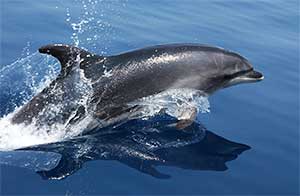
In the early 1980s, bottlenose dolphins were first observed in Monterey Bay. This species is now considered a resident and usually stays within one km of shore along sandy beaches, travelling just outside the breakers. |
 |
|
Harbor Porpoise
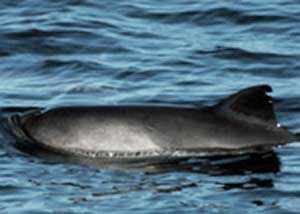
A regular but hard-to-see species, harbor porpoise are usually stay close to shore. These small porpoises (5-6 feet) usually travel in small groups and are very shy and tend to stay away from boats. |
 |